
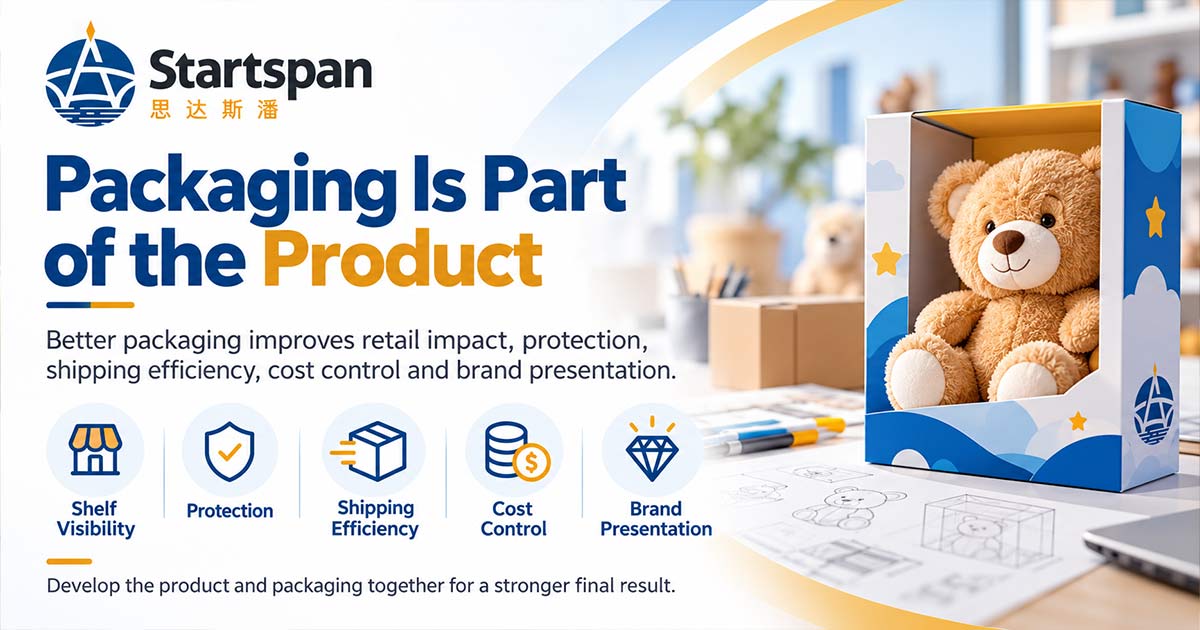
Packaging isn’t just a box.
It affects shelf visibility, product protection, shipping efficiency, cost — and how customers perceive the product.
One common mistake in toy development is finishing the product first and thinking about packaging last.
A better approach is to develop the product and packaging together from the beginning.
Packaging Affects More Than Product Appearance
Toy packaging is not only about visual presentation. It also affects how the product is protected, displayed, shipped, packed, and positioned in the market.
For toy brands, importers, wholesalers, and sourcing teams, packaging decisions can influence product dimensions, accessory placement, master carton size, shipping efficiency, and overall project cost.
This is why packaging should be considered as part of product development rather than treated as the final step.
Packaging Affects Shelf Visibility
Packaging is often the first thing buyers notice before they interact with the toy itself.
In physical retail, packaging helps a product stand out among competing products on the shelf. Clear product presentation, recognizable branding, appropriate colors, and a well-planned box structure can all influence how quickly a customer understands the product.
The same principle applies to e-commerce. Product packaging often appears in listing images, promotional materials, and unboxing content, which means packaging becomes part of the product’s visual identity.
For toy brands and importers, packaging should therefore be designed with both product protection and market presentation in mind.
Packaging Protects the Product
Good toy packaging should protect the product throughout storage, transportation, and handling.
Depending on the product, packaging may require inner trays, blister structures, cardboard supports, protective bags, foam, or other inserts to reduce movement and prevent damage.
If packaging is considered too late, the product may not fit the planned box efficiently, accessories may be difficult to secure, and additional protective materials may be required.
For this reason, product dimensions, accessory layout, and packaging structure should be reviewed together during development. This helps reduce unnecessary revisions and improves the final packing solution.
Packaging Affects Shipping Efficiency
Toy packaging size has a direct impact on logistics efficiency and shipping cost.
Even a small increase in the size of an individual package can significantly affect master carton volume when hundreds or thousands of units are shipped together.
For international buyers, packaging dimensions can influence container loading quantity, volumetric weight, warehouse space, and final landed cost.
A well-planned package should balance retail presentation, product protection, and shipping efficiency rather than focusing on appearance alone.
Packaging Helps Control Costs
Packaging decisions can also affect the total cost of a project.
When packaging is developed only after the product is finalized, last-minute changes may require new inserts, box adjustments, artwork revisions, or even changes to the product arrangement.
These revisions can increase sampling time, tooling expenses, material usage, and production coordination costs.
Developing the product and packaging together helps identify potential issues earlier and can reduce unnecessary changes before mass production.
Packaging Builds Brand Value
Packaging is part of how customers experience and evaluate a product.
A well-designed package can improve product presentation, communicate positioning, support branding, and create a more consistent overall customer experience.
Different products may require different packaging strategies. A collectible item may need a more premium presentation, while a high-volume promotional toy may need a simpler and more cost-efficient solution.
For brands and importers, packaging should match the target market, sales channel, and expected product positioning.
Why Product and Packaging Development Should Happen Together
The product and its packaging are closely connected.
Packaging affects how the product is protected, presented, shipped, stored, and positioned in the market. At the same time, the size, structure, accessories, and intended sales channel of the product influence the final packaging solution.
When both are developed together, buyers and manufacturers can identify potential problems earlier, reduce unnecessary revisions, and create a more efficient final product.
This is especially important for OEM and ODM projects, where product details, packaging structure, artwork, labels, accessories, and shipping requirements often need to be coordinated at the same time.
Packaging Support for OEM and ODM Toy Projects
In OEM and ODM toy projects, toy packaging development can include box structure, artwork, logo placement, language versions, labels, inserts, barcodes, warning information, and master carton details.
For products sold in regulated markets, packaging may also need to include age grading, warnings, safety information, and other required labeling.
At STARTSPAN, we support global buyers with product sourcing, OEM/ODM development, packaging customization, logo and label solutions, language versions, sampling coordination, and production follow-up.
Discussing packaging requirements early helps us evaluate the project more completely and can make the development process more efficient.
Final Thoughts
Packaging should not be treated as an afterthought.
It is part of the product development process and can influence visibility, protection, shipping efficiency, cost, and brand value.
For toy brands, importers, wholesalers, and sourcing teams, developing the product and packaging together can help reduce unnecessary changes and create a stronger final result.
Planning a new toy project?
If you need support with toy sourcing, OEM/ODM manufacturing, custom packaging, logo and label customization, or production coordination, contact STARTSPAN to discuss your project.